Fine dining etiquette helps you share a table comfortably: choose the right utensils, handle small mishaps quietly and make your intentions clear. This guide explains common Western formal-table conventions. Customs and restaurant service styles vary, so these are useful habits rather than a universal code.
Start with the setting in front of you. Use utensils in the order of the menu, keep conversation comfortable and use a few plain words when a gesture could be misunderstood.
How to Use Cutlery in Fine Dining
At a Western formal setting, work from the outside towards the plate as the courses arrive. The menu determines the arrangement: a salad fork may come before or after the main-course fork, and some utensils arrive with their dish. Knives face towards the plate; dessert cutlery may be brought later rather than laid above it.
Cut a piece or two at a time. Hold your utensils with a controlled grip rather than a closed fist. Keep used cutlery on the plate during a pause, where it will not mark the tablecloth.
How to Use a Spoon and Fork Together
When a dish is supplied with a spoon and fork, use the fork to steady or guide the food and the spoon to scoop it. Take manageable mouthfuls rather than loading both utensils at once. The dish and the utensils supplied matter more than applying one technique to every course.
The Napkin
Place the napkin on your lap once seated and use it to dab your mouth as needed. Keep it available throughout the meal. At the end, leave it loosely folded beside your setting rather than trying to restore its original fold.
Which Glass Is Yours
In a Western formal setting, your glasses are on the right, above the knives and spoons, and your bread plate is on the left. That right-for-drinks, left-for-bread pairing is more useful than guessing by glass size.
The number and arrangement of glasses depend on the drinks being served. Do not assume the largest is water or that every setting includes separate red, white and Champagne glasses. If two neighbouring settings have become mixed up, identify your own drink before continuing.
How to Eat Bread at the Table
For bread rolls at a formal table, take a roll onto your plate, break off a small piece and butter that piece before eating it. Repeat as you go rather than buttering the whole roll at once. If butter is shared, take a portion onto your own plate first.
What Order the Courses Arrive In
The menu gives you the sequence. A starter, main and dessert is one possible meal; a tasting menu follows the kitchen’s offered progression. Salad, seafood and other courses do not have one compulsory position in every restaurant.
Use the utensils set for the course that has arrived. Our guide to what fine dining actually means explains the difference between menu formats and the wider dining experience.
The Rules Service Follows
You do not need to predict which side a server will approach from. Service methods, seating and access around the table differ. When a plate or drink arrives, give the server room and let them place it rather than reaching across their path.
At arrival, give the booking name if you have one and follow the seating arrangement. During the meal, a quiet “thank you” and space to work help more than trying to memorise a clockwise service pattern.
Wine Etiquette
Choose wine around what you enjoy, the food and the amount you want to spend. If a bottle is presented, read the label before it is opened so you can identify any mismatch with the order.
If you are offered a taste and something seems wrong, describe it to the server. A wine fault and a style you do not enjoy are different issues; explain which concerns you instead of treating approval as a test you must pass. You can decline more wine without giving a reason.
Toasting at the Table
When someone proposes a toast, pause the conversation and listen. Raise your glass at its conclusion and take a sip; there is no need to finish the drink or reach across the table to clink every glass. A non-alcoholic drink is equally suitable.
In the Western convention described by Emily Post, the person being honoured acknowledges the toast rather than drinking to themselves. At an informal gathering, follow the mood of the occasion without turning it into a ceremony.
Seasoning, Dropped Cutlery and Other Small Moments
Taste before adding seasoning so you know what you want to change. Ask for shared items to be passed rather than reaching across another person’s setting.
If you drop a utensil, tell the server and request a replacement. Do not return it to the table for use. If it creates an immediate trip hazard, move it out of the way. For a spill, set the glass upright and alert the server; avoid spreading the liquid while trying to clean the whole table yourself.
To get attention, make eye contact or raise a hand briefly when a server looks your way. Avoid clicking your fingers or calling across other tables.
Leaving the Table Mid Meal
Say a quiet “excuse me” when you need to leave. Keep your used utensils on the plate and let the server know you are returning if clearing could be ambiguous. You do not need to explain a private reason to the whole table.
How to Signal You Are Finished
For the Western finished signal described by Emily Post, lay your knife and fork together on the plate with both handles pointing towards four o’clock. Leave the plate where it is rather than pushing it away.
The position is a helpful cue, not a guarantee of immediate clearing. If a server reaches for a plate you are still using, simply say, “I’m still eating, thank you.” Clear words are more reliable than expecting every person to read the same cutlery code.
What to Do When You Are Unsure
Give yourself time to notice the setting and enjoy the company. Take manageable bites, finish chewing before speaking and make room for other people in the conversation. If an unfamiliar utensil arrives, one specific question about that course is enough.
Clothing is a separate part of preparing for the occasion. Our guide to what to wear for fine dining covers that decision.
Common Questions About Fine Dining Etiquette
How do I use cutlery correctly?
At a Western formal setting, use the outer utensils first and work inward according to the menu. Some courses arrive with their own utensils.
Which side do staff serve food from?
There is no single rule for every restaurant. Service style and access around the table affect the approach; leave room for the server to place and clear dishes.
How do I signal I'm finished?
Lay your knife and fork together with the handles towards four o’clock, following the Emily Post convention. You can also tell the server you have finished.
How should bread be eaten?
For a bread roll at a formal table, break off a small piece, butter it and eat it before preparing the next piece.
How do I use utensils during pauses?
Rest used utensils on your plate. If someone starts clearing while you are still eating, say so; you do not need to rely on a particular crossed or angled position.
The Short Version
- Use the menu to navigate a Western formal setting, working outside in
- Keep your napkin on your lap and used utensils on your plate
- Drinks are on the right and bread on the left in that setting
- Break and butter a bread roll a piece at a time
- Give servers room and handle small mishaps quietly
- Use the four-o’clock finished cue, with words whenever needed
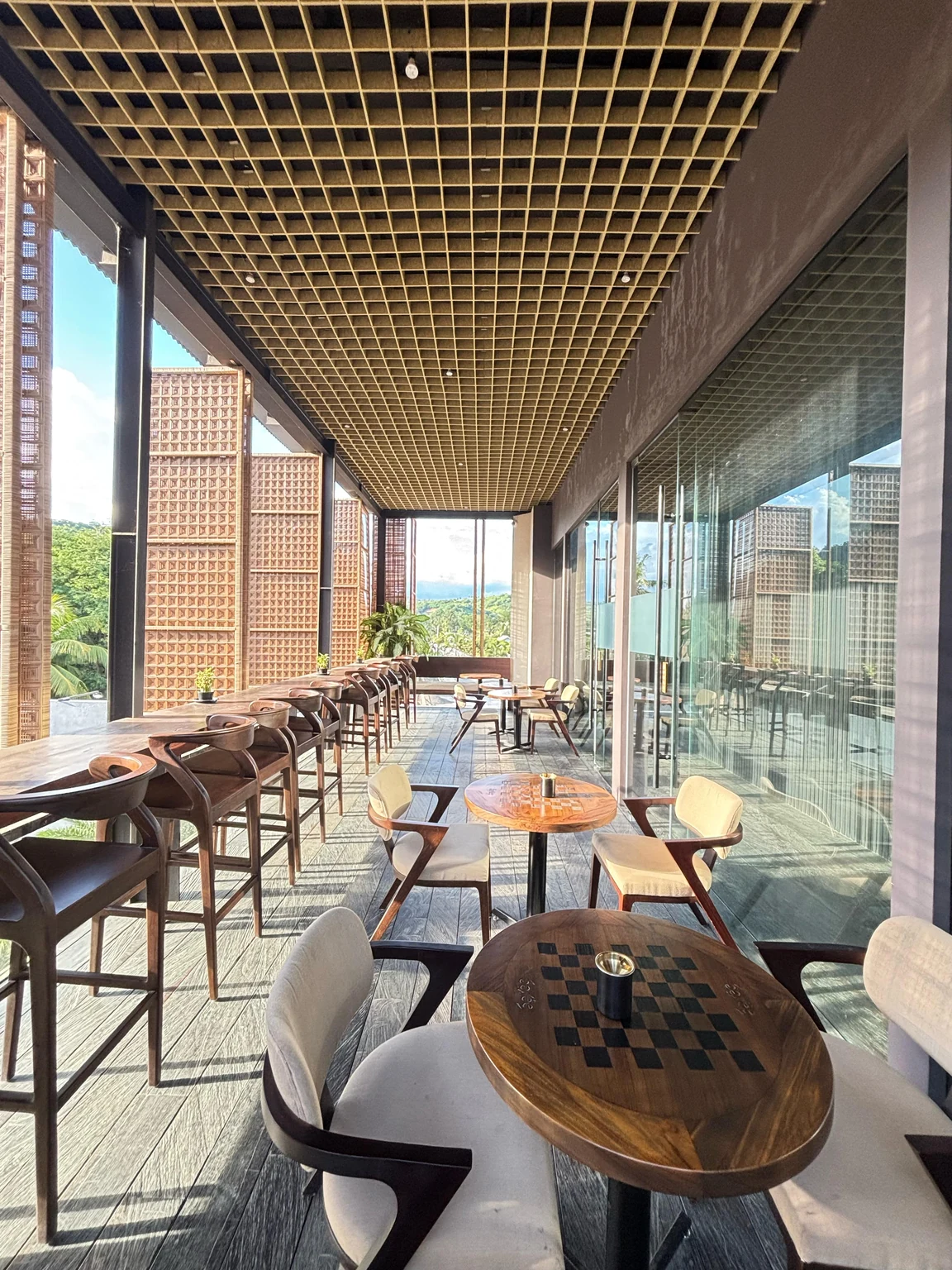
For a dining option on Lombok, explore fine dining in Kuta Lombok at Soirée Music Bar & Dining on Jl. Mawun. The venue is open daily from 7am to midnight.